 SnapPose
Most disappointing portraits are not a camera problem. The face is half dark, the eyes are lost in shadow, or the sun is blasting one cheek. You can fix nearly all of it in about ten seconds, and the fix is a few steps and a turn of the shoulders, not an editing app.
Look at the face, not the screen
Before you press anything, look at the person. Check three spots: the eye sockets, the underside of the nose, and the chin. If those are dark, the light is coming from too high. If one side is bright and the other murky, the light is too far to the side. If everything is bright and flat, with squinting eyes, the person is staring into the sun.
Naming the problem tells you the fix. You are not guessing at settings; you are reading what is already there.
Turn the person, not the phone
The easiest move is to rotate the subject. Light stays where it is, so a quarter turn changes everything.
- Sun behind them, face dark: turn them around so the sun is behind you, or at least off to one shoulder.
- Squinting into the sun: have them turn about forty-five degrees so the light falls across the face rather than into the eyes.
- Hard shadow on one side: turn them until both eyes catch some light, even if one side stays softer.
Ask for a small move and look again. A small turn of the chin toward the brighter side often does more than walking twenty steps.
Find shade that is open, not dark
Midday sun makes dark eye sockets and bright foreheads. Moving into shade helps, but only if the shade is open to the sky. Under a dense tree canopy the face turns murky and a little green. At the edge of a building’s shadow, facing out toward the bright street, the light is soft and even.
A simple test: the person should be in shade, but able to see a large patch of open sky or a bright wall. That is where the soft light comes from. If you cannot see any sky from where they stand, move them toward the edge.
Use walls, pages and white clothing as reflectors
Light bounces. A pale wall, a white shirt, a sheet of paper or even a light-coloured pavement sends soft light back into shadows.
- Stand the person near a light wall, with the wall on their darker side.
- Hold a white notebook or a folded jacket just below the chin, out of frame, and watch the shadows lift.
- Avoid coloured walls up close: a bright red wall will tint the skin.

Indoors, treat the window as the sun
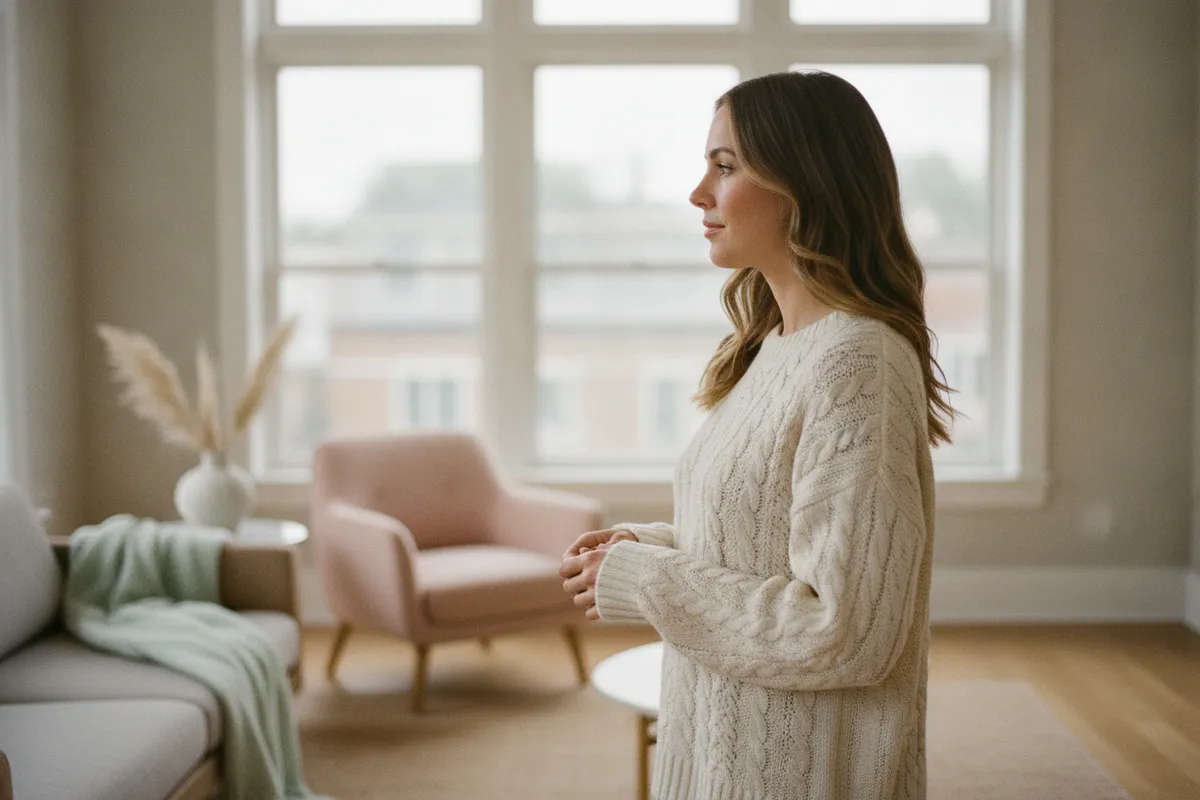
A window is the best light in most homes. Put the person facing the window, or at a slight angle to it, and stand with your back to the room. Then switch off the ceiling lights, which usually add a yellow tint and downward shadows.
If the person must stand with the window behind them, they will turn dark. Either swap places, or move the phone so you are shooting from beside the window. Tapping the face on screen before shooting asks the phone to expose for skin instead of the bright window.
For more on how phone cameras treat edges and backgrounds, see phone portrait mode explained.
When you cannot move anyone
Sometimes the group is fixed: a table at a restaurant, a seat on a train, a crowd at a viewpoint. Then you move instead. Walk a few steps to your left or right and watch how the shadows on the face change as you go. Crouching a little often removes a bright forehead, and stepping back and zooming slightly flattens harsh shadows under the nose. If nothing works, put the brightest light behind you and accept a simple, honest photo.
Golden hour is not magic, but it is helpful
Low sun early or late in the day is gentler and warmer, because it comes in at a shallow angle. The same rules still apply. Put it to the side or slightly behind with something pale in front to bounce it back, and you get a soft glow in the hair. Put it straight into the eyes and you still get squinting.
Take a test shot and check the eyes
Zoom into the preview and look at the eyes. Are both visible? Is there a small bright spot in each? If the eyes are dark, move the person or the light before the next frame, not after.
Photos taken while people relax look better than the ones that follow a long set-up. If you need to explain, do it with ease: “Can you turn a little toward me? Perfect.”
A quick checklist
- Look at the eyes, nose and chin shadows before you shoot.
- Fix squinting and dark faces by turning the person.
- Pick open shade, not dense shade.
- Use a pale wall or paper to lift shadows.
- Indoors, face the window and turn off ceiling lights.
- Tap on the face to set exposure.
- Zoom into the preview and check both eyes.