 SnapPose
Couple photos go wrong when both people stop moving and look at the camera. The pictures people love are usually the ones where the two of them are doing something together. These five poses give you an action, so the connection appears by itself and nobody has to “hold” anything.
Why couple photos feel stiff
Two people standing side by side and smiling at the lens is the default, and it rarely looks like the relationship. Each person is managing their own pose, so neither is paying attention to the other. The photo ends up as two portraits that happen to share a frame.
Natural couple photos have one shared thing: a direction, a moment or a gesture. The five poses below are all built on that idea.
1. The walk and talk
Hold hands and walk toward the camera at an easy pace, talking to each other instead of looking at the lens. The photographer should stand slightly lower than eye level and a little to one side, and take a burst.
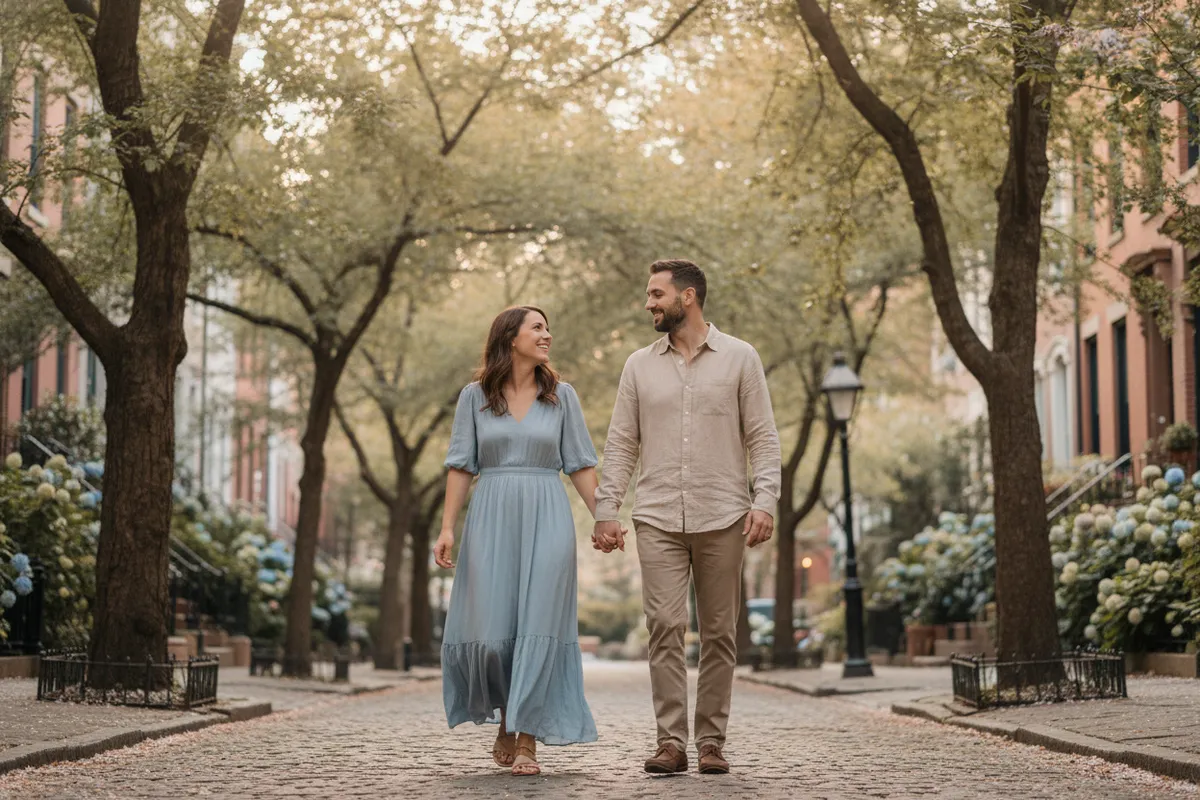
Several frames will catch a real laugh, and the movement keeps shoulders and arms loose. Walk a short stretch several times; the first pass is usually self-conscious and the third is the good one.
2. The forehead touch
Stand close, face each other and gently touch foreheads or noses. Close your eyes or look down. It is a quiet pose that works well in the soft light of early morning or sunset, and it needs very little space.
Keep your hands busy so they do not hang: one on the waist, one on the cheek or collar. If you are different heights, one person can tilt the head instead of the other bending.
3. The back hug
One person stands behind and wraps their arms around the other’s waist. The person in front looks over a shoulder or leans their head back. Because the faces are close, the expression feels warm even when nobody smiles at the camera.
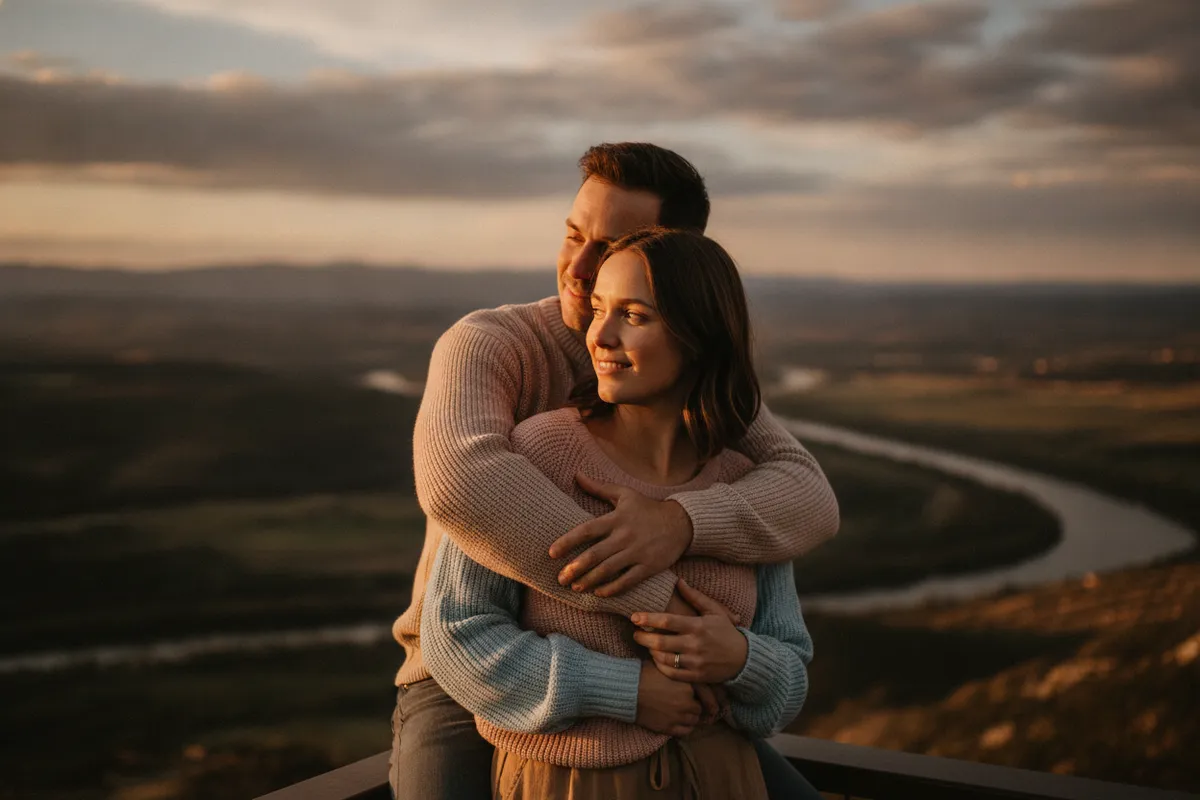
It is also forgiving for height differences, and it works in nearly any setting, from a viewpoint to a kitchen.
4. The side-by-side lean
Stand next to each other, then lean your shoulders together as if you were watching something in the distance. Look at the same point: a view, a sunset, a building. A shared direction of gaze creates a small story, and the viewer wonders what you are looking at.
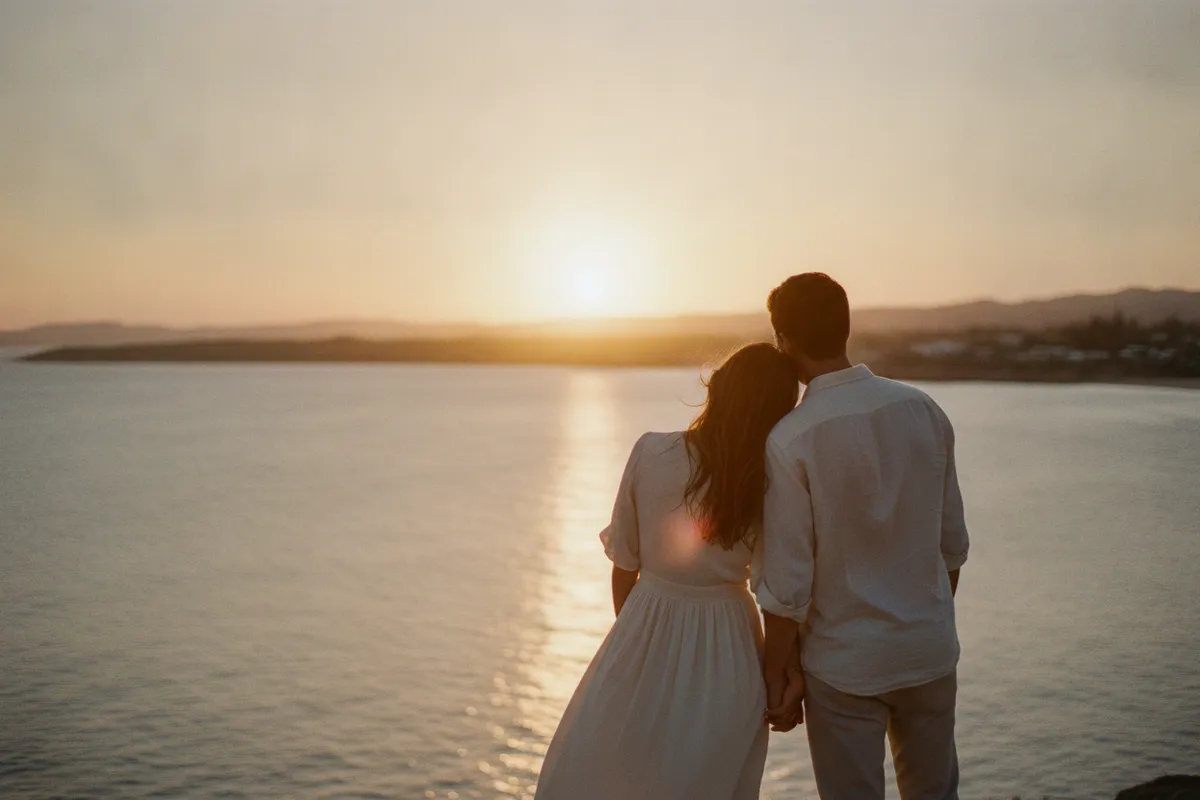
This pose is the easiest for people who dislike being photographed, because nobody has to look at the camera.
5. The spin
One person lifts an arm and turns the other under it, like a slow dance step. Dresses and jackets move, hair swings, and the photographer gets motion that no still pose can imitate. Do it three or four times and pick the best frame.
Choose a spot with a clear floor, and agree who leads before you start so you do not collide.
Direction and framing
- Place the pair slightly off-centre and leave space in the direction they face.
- Include part of the setting so the picture says where you were.
- Shoot from chest height for most poses, and a little lower for walking shots.
- Avoid shooting from above, which makes people look smaller and less confident.
Small details that help
Keep wardrobe colours harmonious rather than identical. Take phones and keys out of your pockets, because bulges break the line of the clothes. Agree on a signal, such as a squeeze of the hand, for when you want to change the pose, so you do not freeze while discussing what to do next.
When one of you hates being photographed
It is common for one partner to enjoy photos and the other to dread them. Do not ask the reluctant person to perform. Pick the pose with the least camera contact, such as the side-by-side lean or the walk and talk, and keep the session short: ten minutes of real movement beats an hour of repeated attempts.
Let them see a few results on the screen early. Most people relax once they notice that the pictures look like them on a good day, and the second round is nearly always better than the first.
Make it feel like a moment, not a task
Give each other something small to say or do. Whisper a joke, point out something in the distance, adjust each other’s collar. The photographer can also suggest a prompt such as “tell each other what you ordered for dinner”. Real conversation changes the face in a way that “smile now” never will, and it gives the photographer natural expressions to choose from.
A quick checklist
- Pick a pose that has an action, not a position to hold.
- Look at each other or at the same point, not always at the lens.
- Give every hand a job: a waist, a cheek, a collar or a hand held.
- Keep the camera at chest height and leave space in front of the couple.
- Shoot a burst and choose the frame between two moments.