 SnapPose
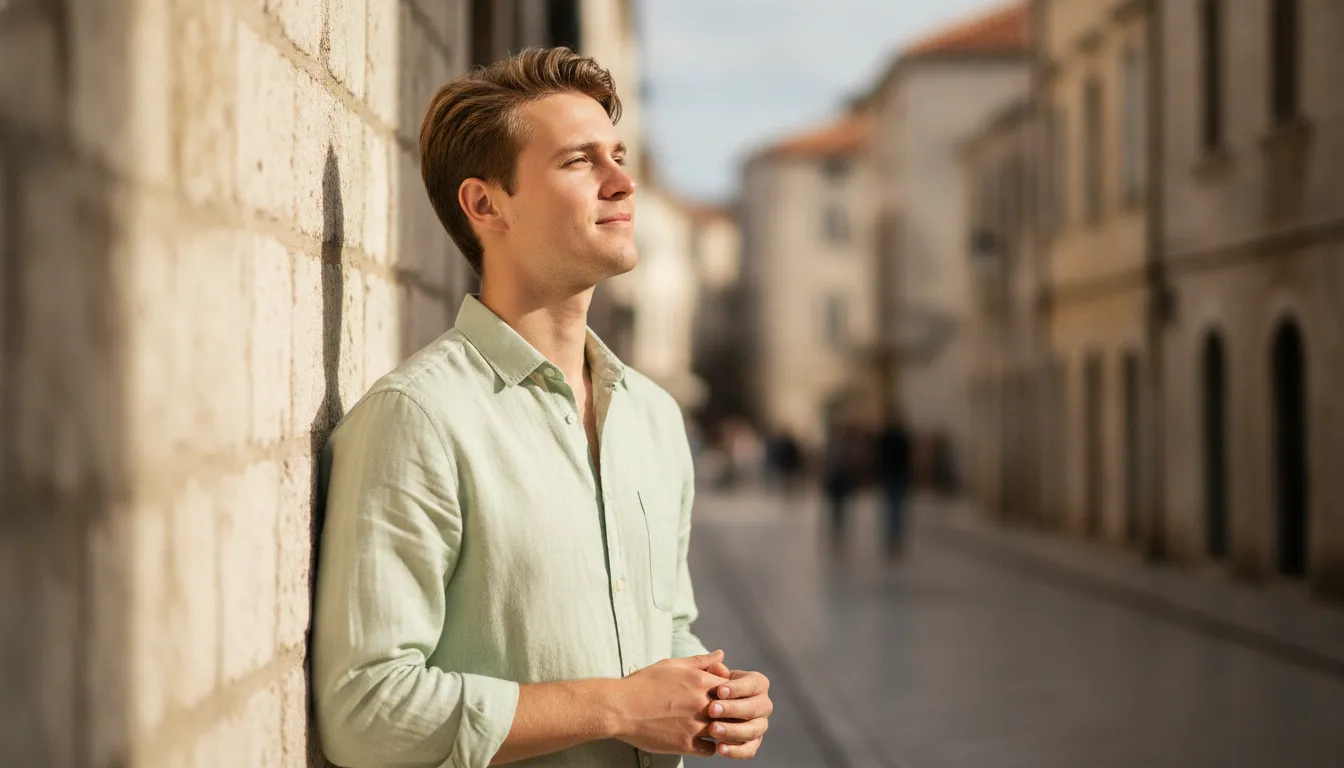
You find the view, hand your phone to someone nearby, and get back a photo where your head touches the top edge and the famous building is a sliver on the left. The stranger did nothing wrong. They had no idea what you wanted, and you gave them four seconds of nothing. A fifteen-second briefing fixes almost all of it.
Choose the person and the moment
Ask someone who is already holding a camera or a phone and is not in a hurry. Photographers and other travellers understand what a framing is. Avoid people who are mid-conversation, carrying children, or rushing for a train.
Ask before you walk into position. “Would you mind taking one photo of me here?” is easier to say yes to than a stranger being handed a phone and an unexplained task. Smile, make it clear you will take theirs in return, and keep it light.
Set the phone up before you hand it over
Do the settings yourself, because a stranger will not know your phone.
- Open the camera app and put it on the normal rear camera, not a zoom you left on by accident.
- Clean the lens with your sleeve. Pocket lint is the most common reason for a hazy travel photo.
- Turn off any filter or mode that might surprise you, such as a heavy effect.
- Tell them where the shutter button is, or that the volume button works too.
Handing over a ready phone takes five seconds and removes most of the fumbling.

Say three things, in this order
Most people forget instructions that come in a list of ten. Give three short ones.
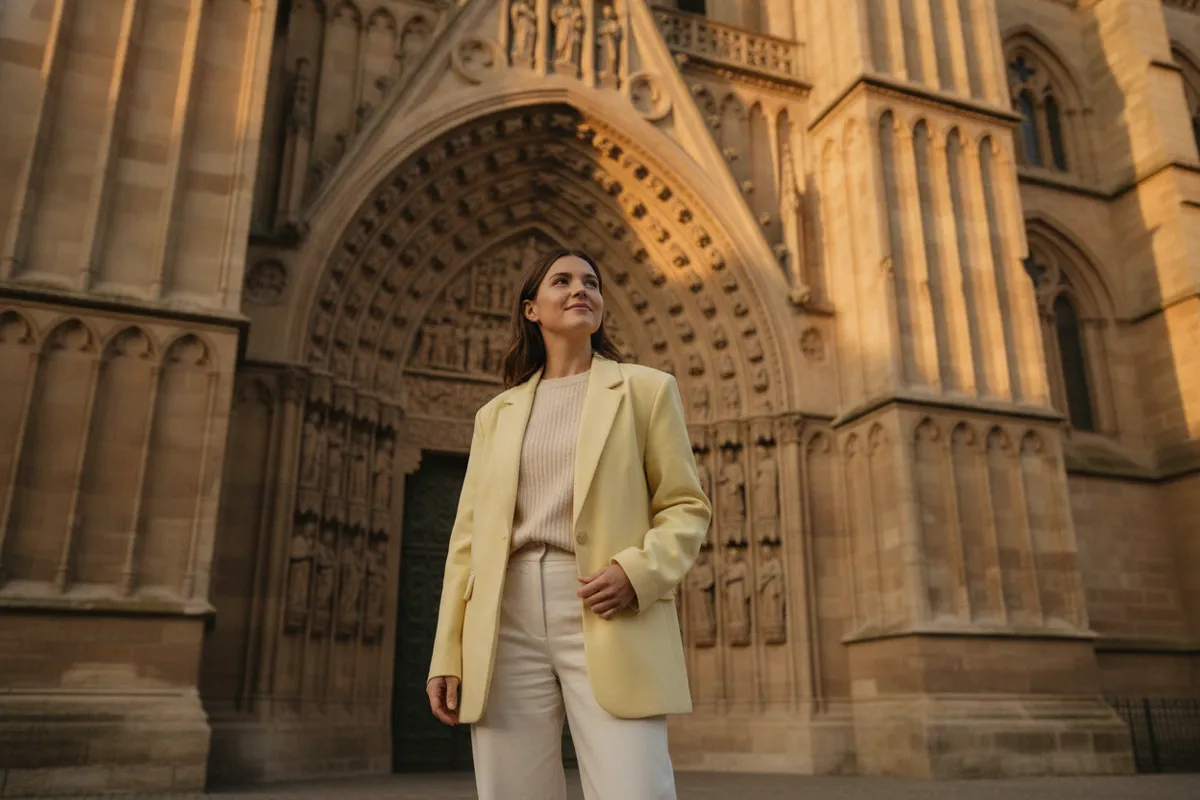
- Orientation. “Vertical, please” for tall things like towers and doorways, “horizontal” for wide views.
- What must be in. “I want the whole tower and a bit of sky above it.” Name the landmark, not “the background”.
- Where you stand. Tell them what you will do: “I’ll stand on the left third, so the tower is on the right.”
That last point matters most. Leave room for the place. People tend to centre themselves and cover the thing they travelled to see.
Ask for the shot that gives you options
A single press is a gamble. Ask for three things in one request: “a few shots, please, and one from a bit lower.”
- A few shots. Eyes close, wind moves hair, a bus drives past. More frames means one good one.
- Lower, from about waist or chest height. A slightly low angle makes you look taller and gives the landmark more height. It also keeps the horizon from slicing through your neck.
- One step back. Ask them to include your feet and the ground. A photo cropped at the knees feels cramped, and you can always crop later.
You do not need to say all this in a rush. Tell them, hand over the phone, then step into place.
Give them a way to say you are ready
Agree on a cue so nobody is photographing you while you adjust your jacket. A raised hand, “ready”, or a nod works. Then have your first pose in mind. If you freeze, a simple default works: weight on the back foot, relaxed hands, and look just past the lens. For more on stiffness, see how to pose for photos when you feel awkward.
If you are travelling as a pair, a shared action beats standing still. Several ideas are in five couple poses that look natural.
Handle the busy spots
Popular viewpoints often have a queue of people wanting the same picture. Work with it rather than against it.
Stand where the line naturally ends and ask the next person in it. They are already waiting, so they have the time, and they will want a photo of their own taken too. Trade favours: you take theirs while they take yours.
If the crowd is thick, tell the photographer what you accept. “Some people in the background are fine, I just need the building to be visible.” That stops them waiting two minutes for a gap that will never come, and it stops the whole group behind you from growing impatient.
If no one is around, you are not stuck. Lean the phone against a bag on a wall or a bench, use the timer, and take several. A slightly higher or lower position than you expect often works better than eye level.
Check it before they leave
Take the phone back and look right away, while the person is still next to you. It costs ten seconds and saves a trip back to the same spot.
Look for three things:
- Is the landmark fully in, or cut off at the top?
- Is the horizon straight? Buildings leaning inward can be a sign of a tilted phone.
- Are your eyes open, and is your face lit rather than shadowed?
If something is off, say so kindly and specifically: “Could we try one more with the whole tower in? A bit further back.” People generally happily try again when the request is clear.
A quick checklist
- Ask someone who looks relaxed and already has a camera.
- Clean the lens and open the camera app yourself.
- Give three instructions: orientation, what must be in, where you stand.
- Ask for a few frames, one from a lower angle.
- Agree on a cue before you pose.
- Check the photo on the spot and ask for one more if needed.
- Offer to take their photo in return.